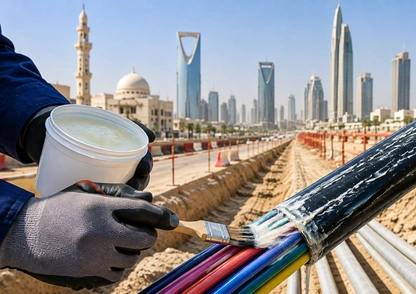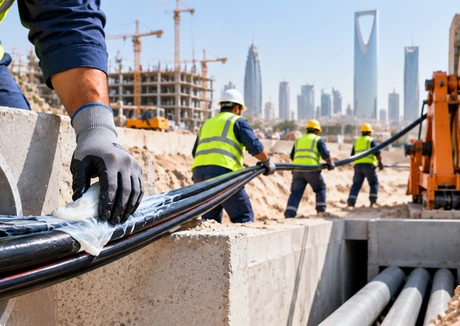
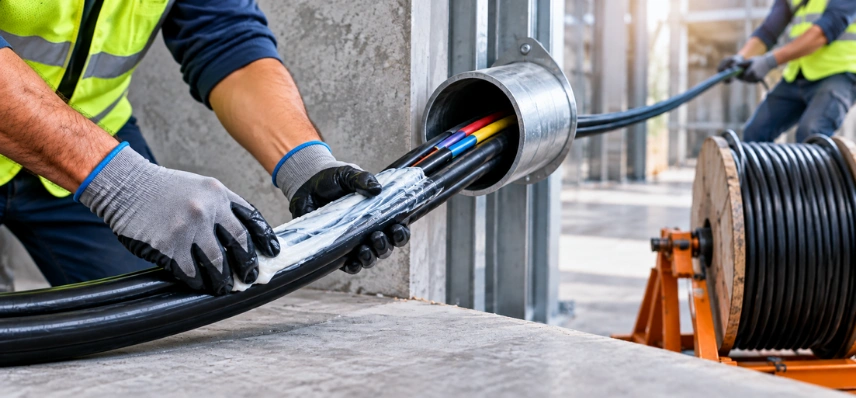
Installing electrical cables through conduits and ducts can be challenging, especially when working with long cable runs, large cables, multiple bends and underground pathways. Friction between the cable jacket and the inside of the conduit can increase the effort required for installation and make cable pulling more difficult.
This is where cable pulling lubricant can help. When selected and applied correctly, cable pulling lubricant reduces friction between the cable and conduit, helping the cable move more smoothly through the pulling path.
For electrical contractors, construction companies, industrial facilities, and infrastructure projects in Saudi Arabia, understanding how to use cable pulling lubricant correctly can help make cable installation more efficient.
Cable pulling lubricant is a specialized lubricant designed to reduce friction during the installation of electrical or communication cables through conduits, ducts, and other pathways.
It is commonly used for:
However, the lubricant should always be compatible with the cable jacket, insulation, conduit material and installation requirements.
When a cable is pulled through a conduit, contact between the cable surface and conduit creates friction. As the pulling distance increases or the route contains more bends, the resistance can become greater.
Using an appropriate cable pulling lubricant can help:
The objective is not simply to apply as much lubricant as possible. The goal is to use the right product and the appropriate amount according to the manufacturer's instructions.
Before applying any cable pulling lubricant, check whether it is suitable for the cable being installed.
Different cable jackets and insulation materials can have different compatibility requirements. A lubricant that is appropriate for one cable may not be suitable for another.
Check:
If compatibility information is unclear, consult the cable or lubricant manufacturer before proceeding.
Before starting the cable pulling operation, inspect the complete conduit or duct route.
Look for:
The cable pathway should be prepared properly before pulling begins. Lubricant is intended to reduce friction; it should not be used as a solution for an unsuitable or damaged cable pathway.
Depending on the size and type of installation, cable pulling may involve pulling ropes, cable rollers, guides, winches, or other installation equipment.
Make sure the equipment is suitable for the cable and project requirements.
Before starting, verify that:
Good preparation can help prevent unnecessary interruptions during installation.
Apply the cable pulling lubricant according to the product manufacturer's instructions.
The lubricant should generally be distributed along the appropriate contact area so that it can help reduce friction as the cable moves through the conduit.
Avoid assuming that more lubricant always means better performance. Excessive application may create unnecessary mess and may not provide additional benefits.
The correct application method and quantity depend on the specific lubricant, cable, conduit, and installation conditions.
Once the cable and pulling route are prepared, begin the pulling operation in a controlled manner.
Avoid sudden movements or unnecessary force. Monitor the cable as it travels through the conduit.
Pay particular attention to areas with:
If unusual resistance occurs, stop and investigate the cause rather than simply increasing pulling force.
Cable pulling should be monitored throughout the process.
The installation team should watch for signs such as:
If a problem occurs, identify and correct the cause before continuing.
Proper monitoring is especially important for expensive power cables and large-scale infrastructure projects where cable replacement can be costly and time-consuming.
Every cable installation is different. The correct lubricant, application method, pulling procedure, and equipment depend on the project.
Always follow:
For technically demanding installations, qualified professionals should determine the appropriate pulling method and equipment.
Using cable pulling lubricant incorrectly can reduce its effectiveness. Some common mistakes include:
Always confirm compatibility with the cable and conduit materials.
Insufficient coverage may not adequately reduce friction during pulling.
More product does not necessarily mean better results. Follow the manufacturer's recommended application instructions.
Lubricant cannot compensate for damaged conduits, sharp edges, blockages, or poorly prepared pathways.
If resistance suddenly increases, investigate the problem rather than simply applying more force.
Saudi Arabia's construction, infrastructure, industrial, telecommunications, and electrical sectors involve projects with a wide range of cable installation requirements.
Long cable routes, underground ducts and demanding installation environments make proper cable-pulling practices particularly important on construction and infrastructure projects.
Industrial plants often require large electrical cables and complex routing systems where the right lubricant helps manage friction during installation.
Communication and data cables may also require suitable installation practices when routed through ducts and conduit systems.
A reliable industrial supplier can help businesses understand product specifications, compatibility, and suitable applications before purchasing.
Using cable pulling lubricant correctly is about more than simply applying lubricant to a cable. Successful cable installation starts with proper planning, cable and conduit compatibility, pathway preparation, correct lubricant application, controlled pulling, and continuous monitoring.
When the appropriate cable pulling lubricant is used according to manufacturer recommendations, it can help reduce friction and make cable installation smoother and more manageable.
Looking for cable pulling lubricant for your electrical or infrastructure project in Saudi Arabia? ARMC Group provides industrial supply solutions for cable installation and other industrial applications. Contact ARMC Group to discuss your requirements and find a suitable solution for your project.